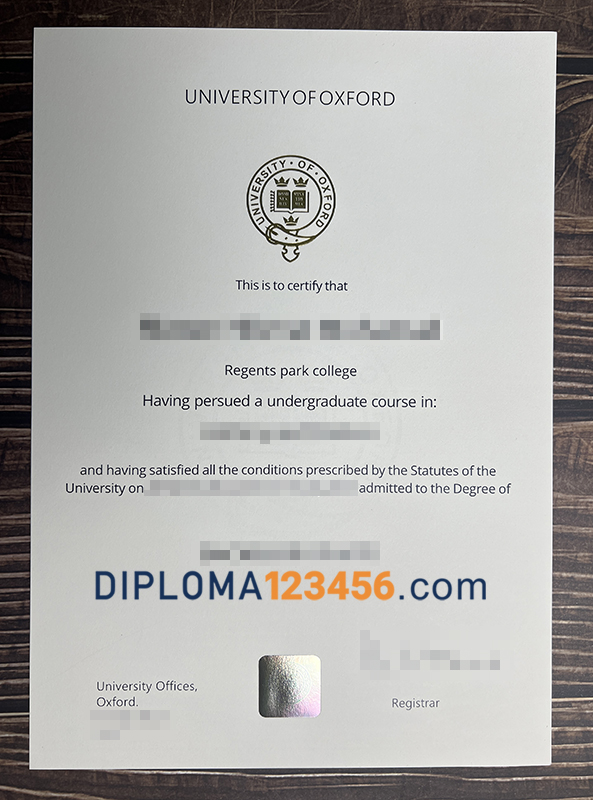
One of the most common misconceptions about the University of Oxford is the tendency to view it simply as a "school." In reality, it functions as a federal system—comprising the central university, four academic divisions, and dozens of independent, self-governing colleges. Each component plays a distinct role, collectively sustaining an academic order that has endured for nearly a millennium. University of Oxford diploma, University of Oxford degree, University of Oxford certificate. Grasping this structure is essential to understanding how Oxford has managed to secure the top spot in the Times Higher Education (THE) World University Rankings for eleven consecutive years—the longest such streak in the history of the rankings.
In the 2027 THE World University Rankings, Oxford once again claimed the number one position, followed closely by the Massachusetts Institute of Technology (MIT). THE’s assessment is based on 17 indicators; Oxford achieved a perfect score of 100 in eight of these—including research productivity, research excellence, and teaching reputation—and scored above 95 in six others. Phil Baty, Chief Global Affairs Officer at THE, highlighted that Oxford earned the highest score for its research environment and outperformed other top-ten global universities in terms of international co-authorship and the ability to attract international talent.
In the 2027 QS World University Rankings, Oxford ranks fourth globally, maintaining its position from 2026. Within the UK, the *Complete University Guide 2027* places Oxford second—trailing only Cambridge—though it ranks first in the nation for its student-to-staff ratio. The university also features in the top ten for 39 individual subject areas in that same ranking. #University of Oxford diploma in UK.
Understanding Oxford’s governance structure is key to understanding the institution. At the university level, the Council serves as the primary decision-making body, overseeing academic policy, strategic direction, and resource allocation. Meanwhile, the Congregation—composed of over 5,000 academic, research, and administrative staff—holds ultimate authority over legislative matters. Day-to-day financial and planning decisions are delegated to the four academic divisions: Humanities; Mathematical, Physical and Life Sciences; Medical Sciences; and Social Sciences.
How long to buy a University of Oxford diploma?
Yet, it is to their individual colleges that students truly "belong." Oxford comprises 36 colleges and 3 societies, each of which is an independent, self-governing legal entity with a charter approved by the Privy Council, managed by a governing body consisting of the head of the college and its fellows. The colleges are responsible for admissions, tutorials, accommodation, and the day-to-day well-being of students, while the university oversees lectures, laboratories, libraries, and the awarding of degrees. This dual identity means that an Oxford student belongs to two distinct communities: the "university" and their "college."